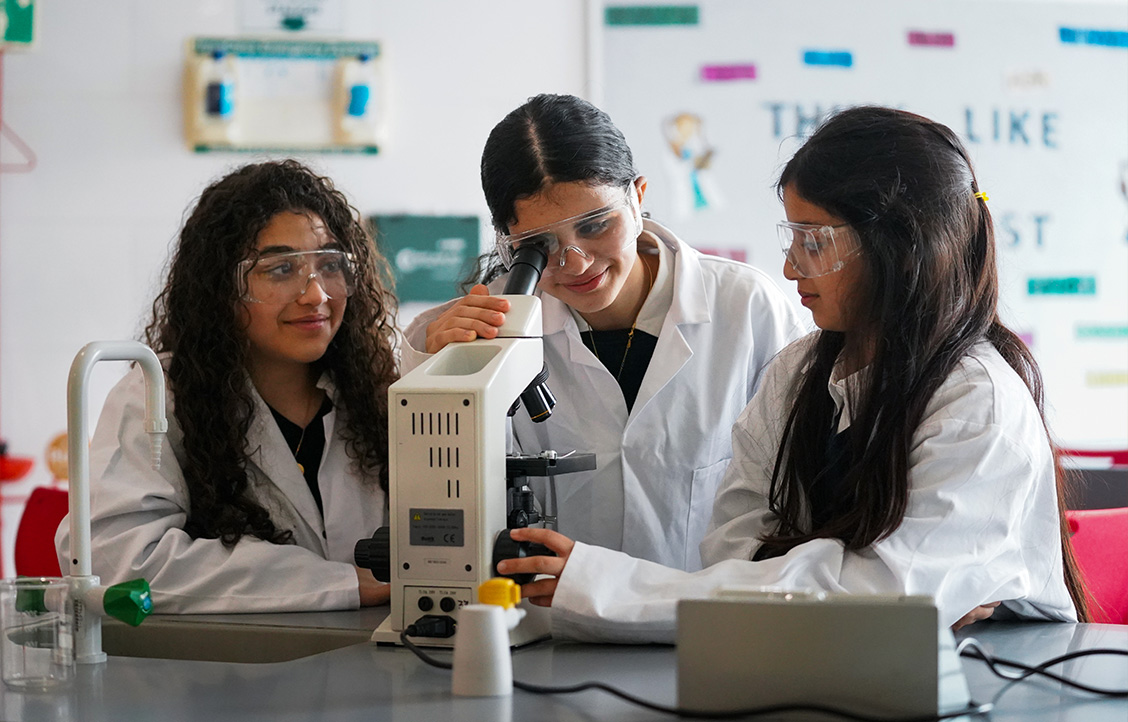
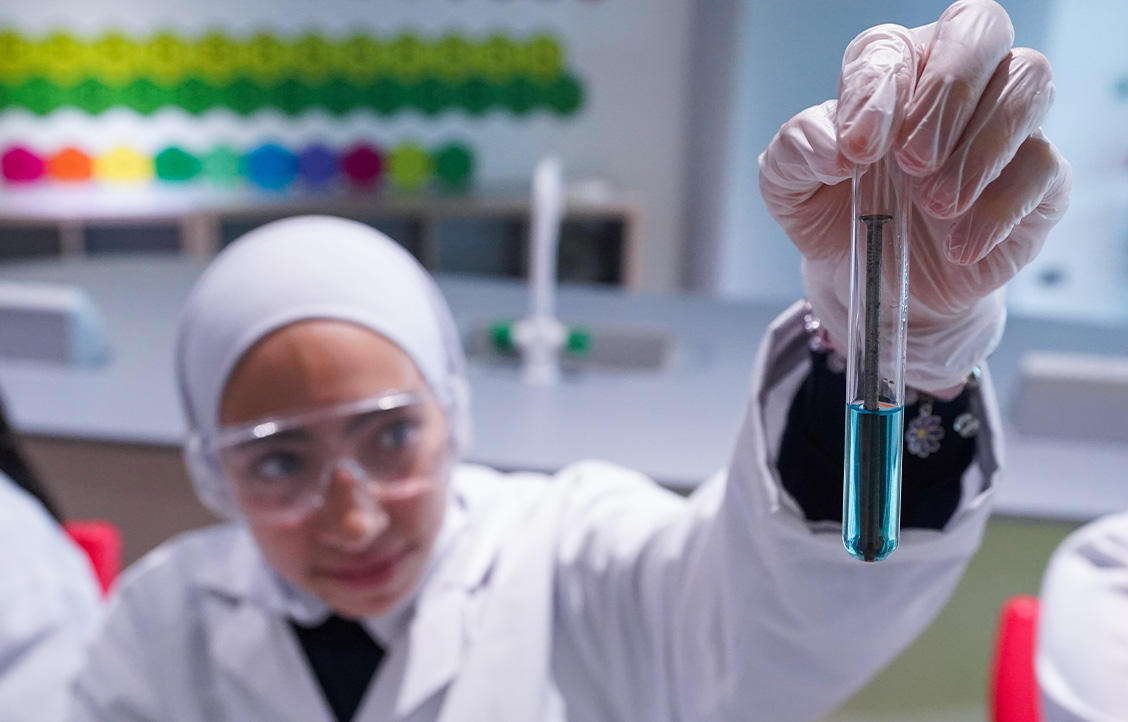
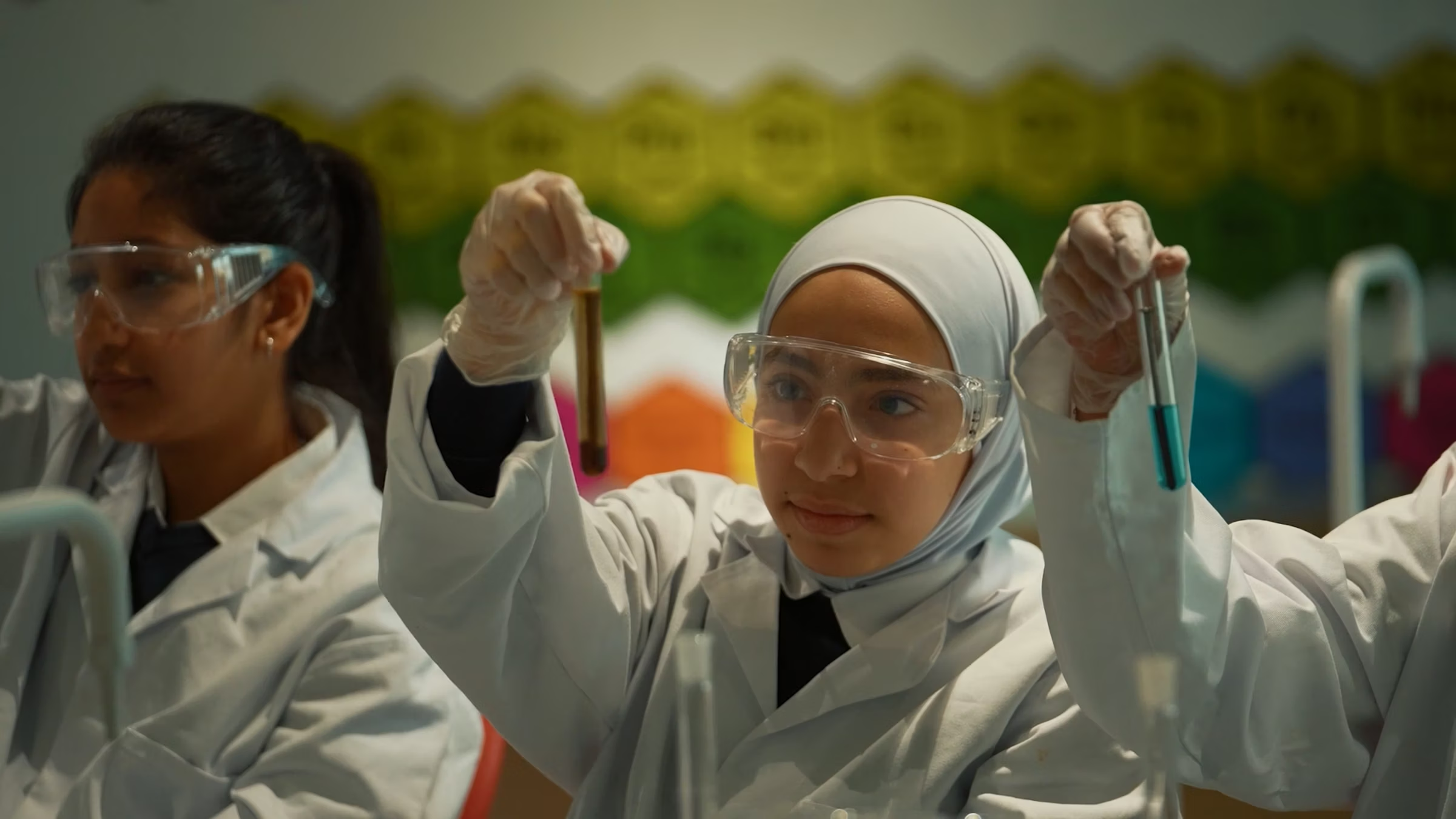
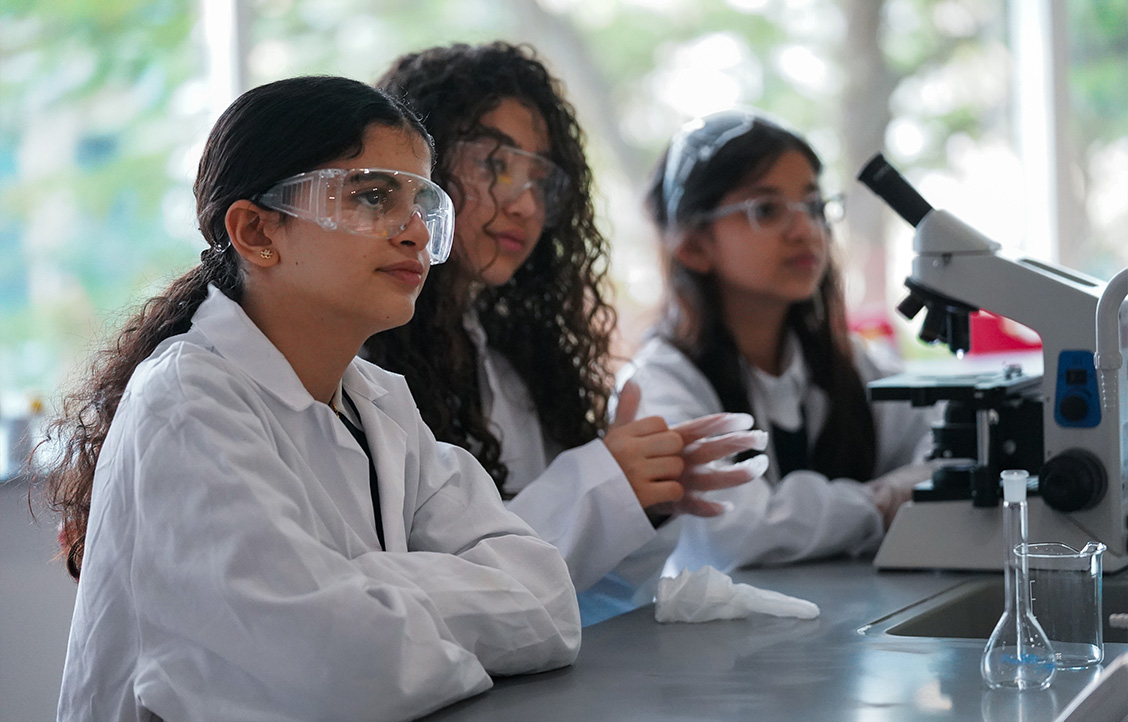
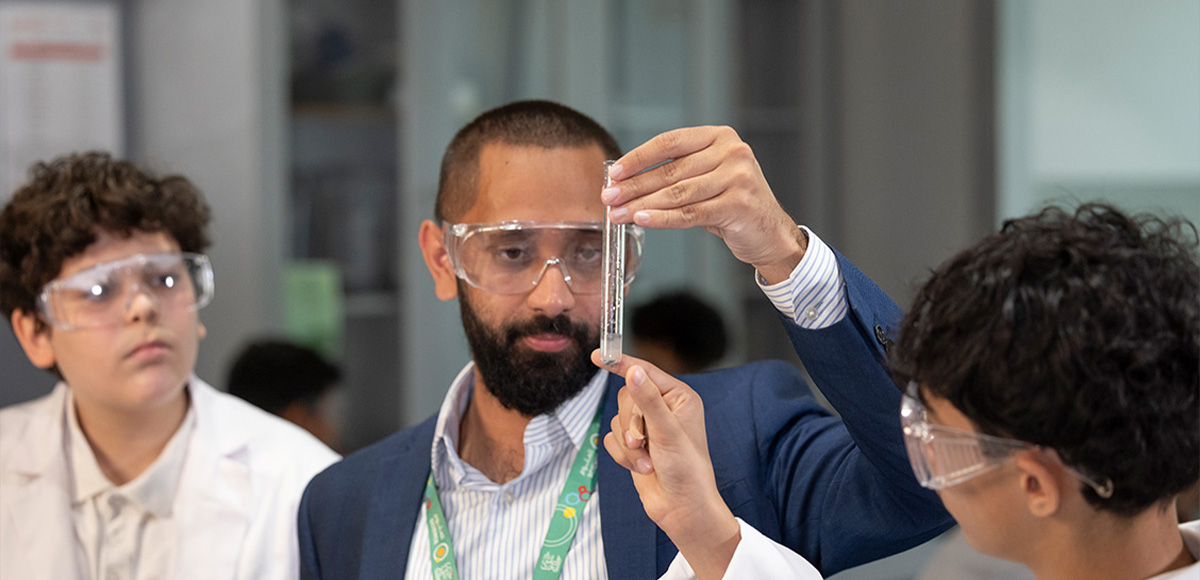
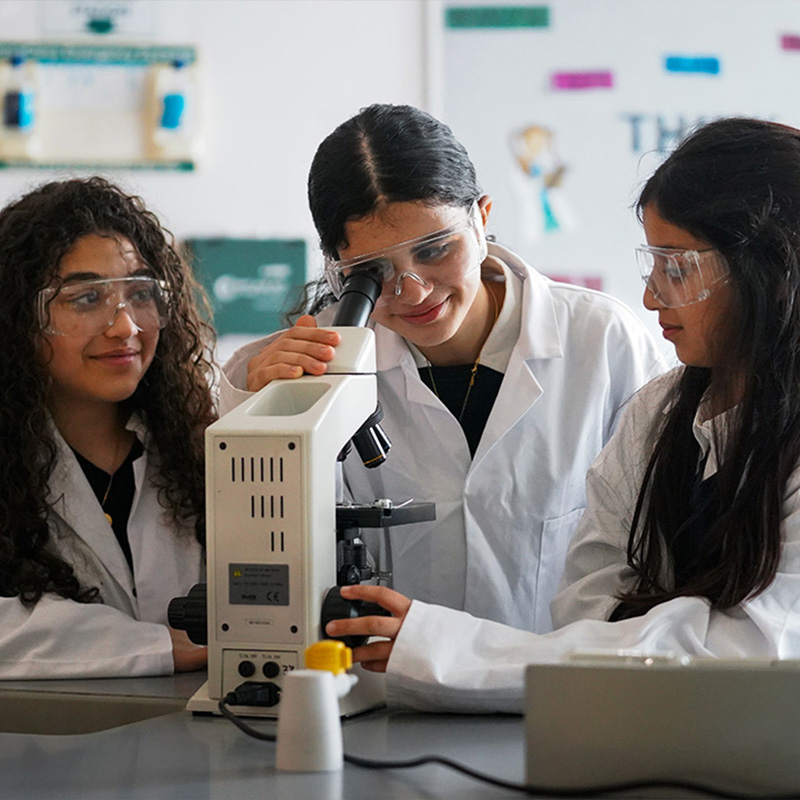
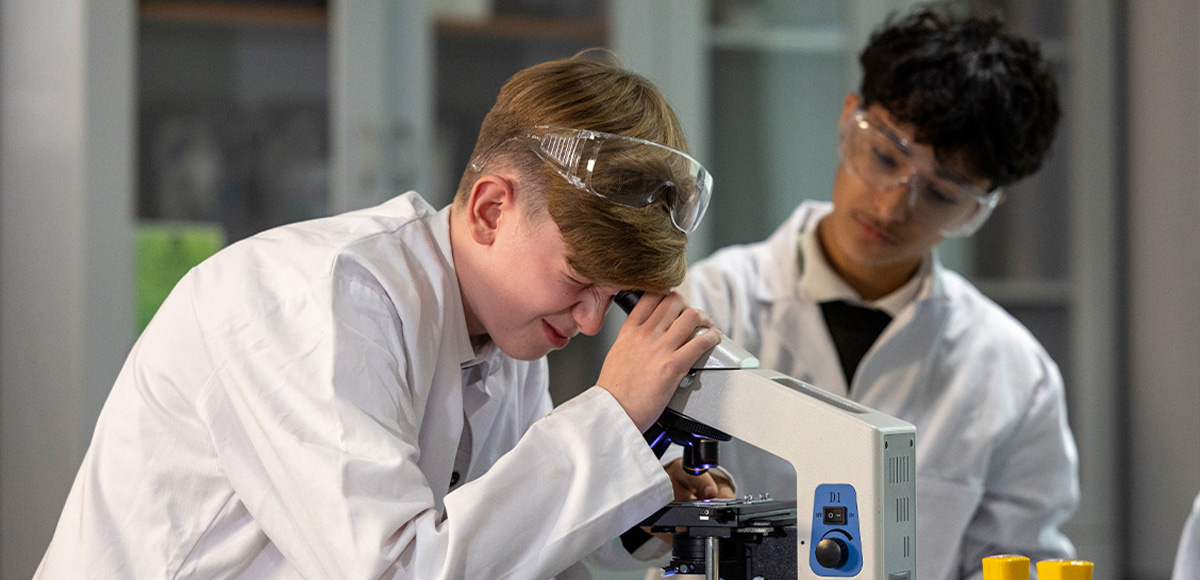
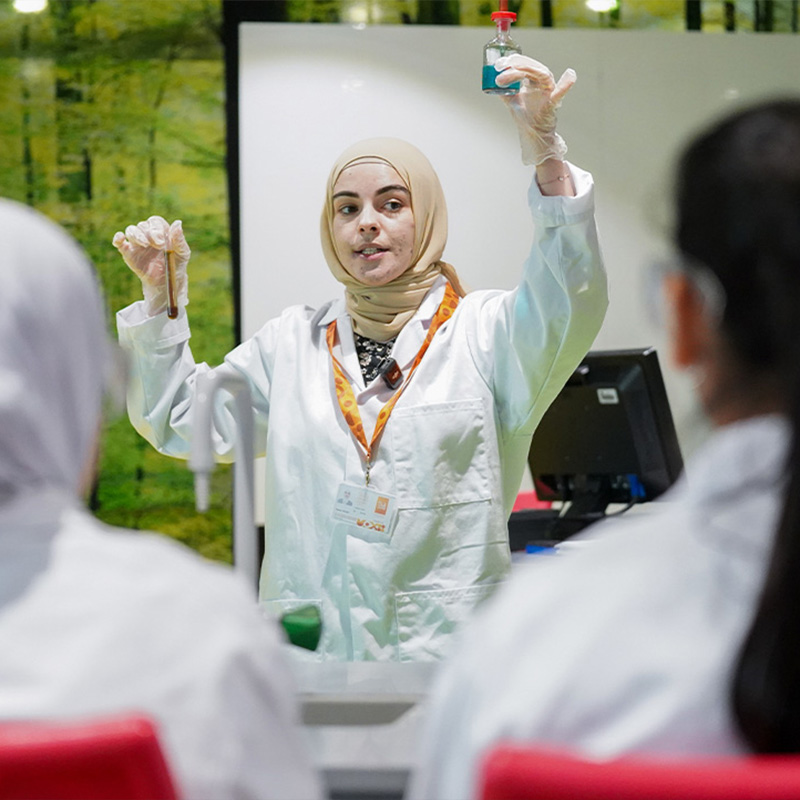
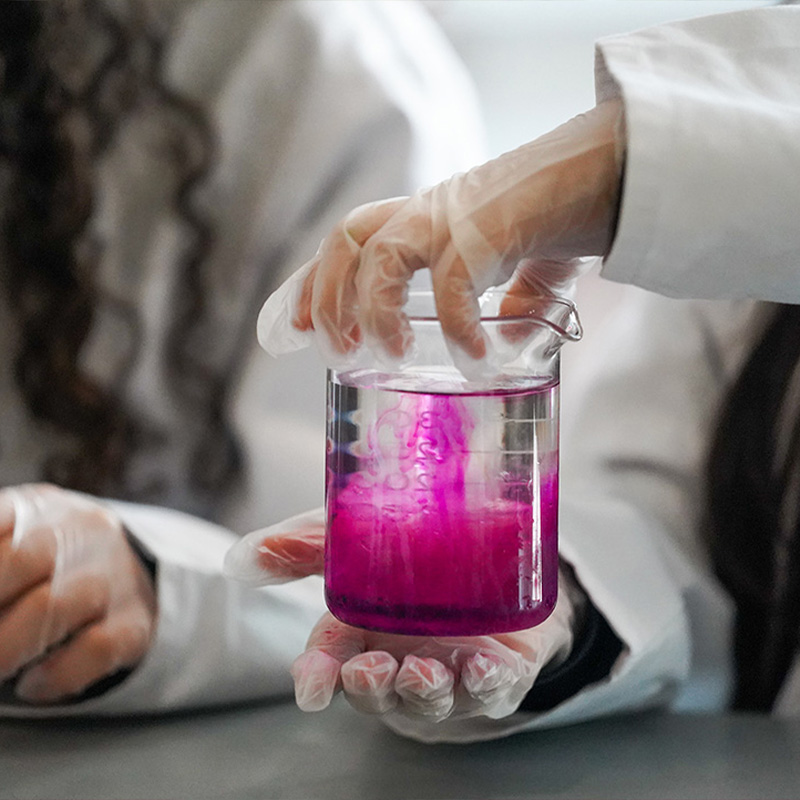
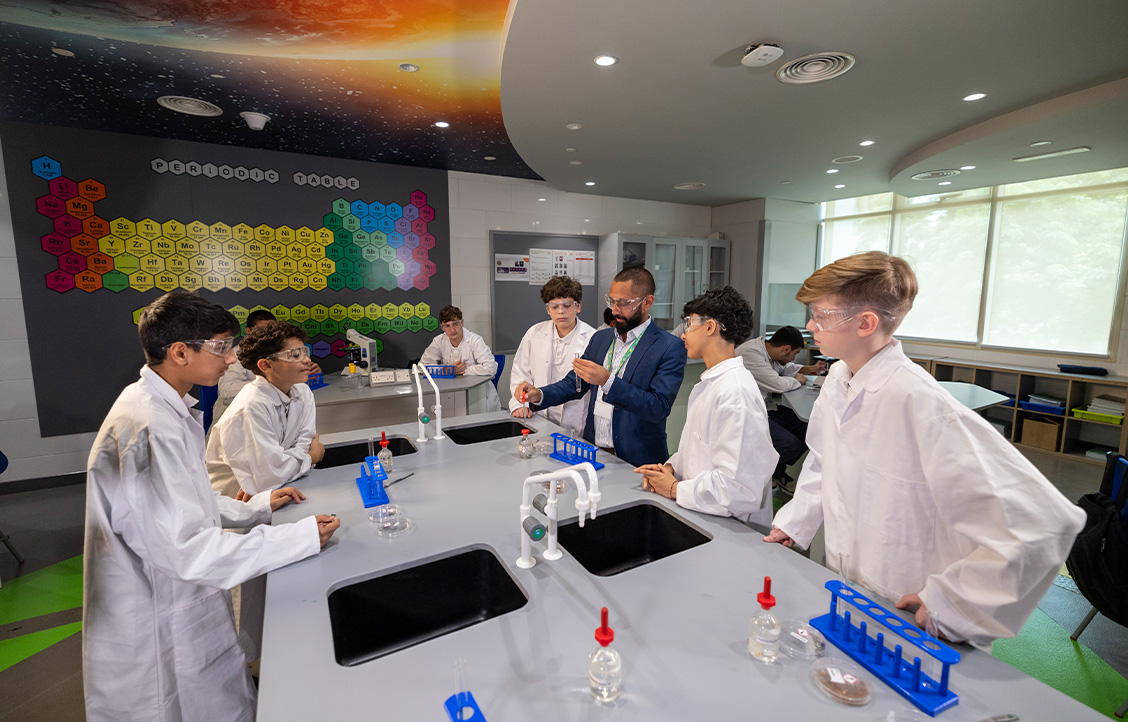
At the School of Research Science, our Science curriculum is designed to ignite students’ natural curiosity about the world around them. From exploring how plants grow in early years to mastering complex theories in biology, chemistry, and physics, students learn to question, experiment, and understand the foundations of life and matter. Science at SRS is not just a subject—it’s a mindset for inquiry, innovation, and impact.
Preparing Students for Life
Science education at SRS builds the habits of thoughtful observation, patient investigation, and critical reflection. In the primary stage, students gain confidence, perseverance, and communication skills. In secondary, they build knowledge to analyse data, assess evidence, and make informed decisions about real-world issues, from energy consumption to public health. Students learn how their actions as global citizens affect the planet and society.
Teacher Insight
"Science helps students see the world through questions, not assumptions. It empowers them to wonder, investigate, and solve. Skills that last far beyond the classroom."
Impact
Students develop:
Secure understanding of core scientific concepts.
Confidence in practical skills and data interpretation.
The ability to evaluate and explain using scientific reasoning.
Readiness for future studies in medicine, engineering, and environmental sciences.
They graduate equipped to make sense of scientific advancements, participate in evidence-based debate, and pursue science-linked careers.
Early Years Foundation Stage
Children explore similarities, differences, and natural changes through play and observation, integrated with stories and outdoor learning.
Key Stage 1
Lessons follow the White Rose Science scheme. Students make predictions, record observations, and use scientific vocabulary to describe results.
Key Stage 2
Taught twice weekly by British curriculum teachers and once by Arabic curriculum teachers. Students conduct practical investigations and develop confident explanations of scientific phenomena.
Key Stages 3
Students receive 4 lessons per week covering biology, chemistry, and physics, with a focus on practical skills and social relevance of science.
Key Stages 4
Students complete three lessons per week per GCSE Science certificate (EDEXCEL), applying core knowledge through essential practical experiments.
Key Stage 5
Students study advanced biology, chemistry, and physics across 6 weekly sessions in Year 12 and 5 in Year 13. Practical skills are assessed through lab-based exams and coursework.
Assessment
Assessments are tailored to track progress at every stage: